Factors That Affect the Durability of Solar Panel Mounting Structures
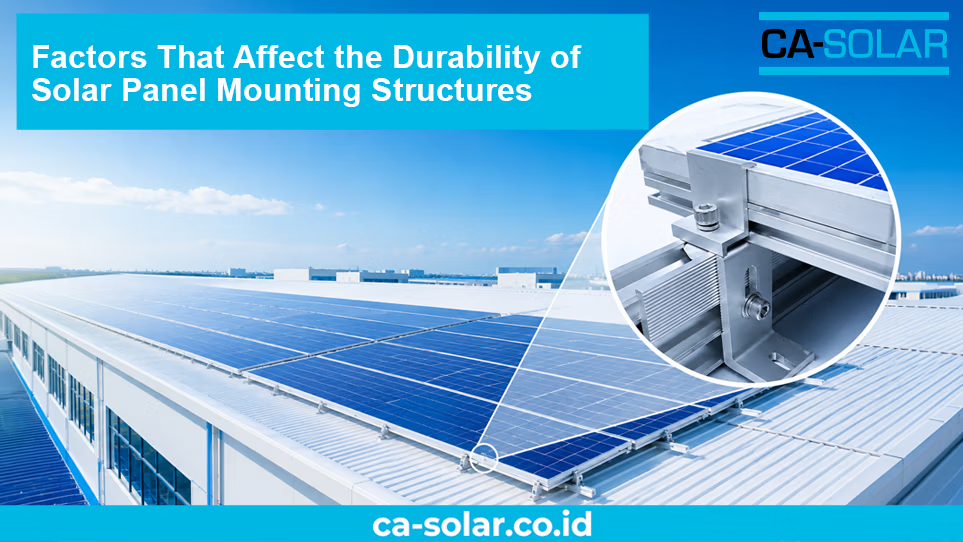
A solar panel mounting structure, or solar mounting system, is designed to support solar panels for decades under various environmental conditions. Throughout its service life, the mounting structure is continuously exposed to sunlight, rain, wind, temperature fluctuations, and humidity, all of which can affect its lifespan.
Therefore, the durability of a solar panel mounting structure is one of the most important factors to consider when selecting a mounting system. A durable structure not only lasts longer but also helps maintain the safety, stability, and overall efficiency of the solar power system.
So, what factors influence the durability of a solar panel mounting structure?
1. The Material Used
The material is the primary factor that determines the durability of a solar panel mounting structure.
Each material has different characteristics in resisting mechanical loads and environmental conditions. Therefore, the material should be selected according to the installation location and project requirements.
Several aspects influenced by the material include:
- Corrosion resistance.
- Structural lifespan.
- Mounting system weight.
- Ease of installation.
- Maintenance requirements.
If you are still comparing suitable materials, the article best materials for solar panel mounting structures can help you understand the differences between aluminum and steel.
2. Corrosion Resistance
Corrosion is one of the leading causes of reduced service life for solar panel mounting structures.
Exposure to rainwater, high humidity, and airborne salt can accelerate corrosion if the selected material does not provide adequate protection.
Locations with a high risk of corrosion include:
- Coastal areas.
- Industrial zones.
- Regions with high rainfall.
- High-humidity environments.
Using materials with excellent corrosion resistance helps maintain the structural performance of the mounting system over the long term.
3. Installation Environment
Every installation site presents different environmental challenges. Solar panel installations in mountainous regions face different conditions compared to projects in industrial zones or coastal areas. These environmental factors should be considered during the planning stage.
Several environmental conditions that affect the durability of the mounting structure include:
- Wind speed.
- Rainfall
- UV exposure.
- Daily temperature fluctuations.
- Humidity levels.
Understanding the site conditions helps determine the most suitable mounting system specifications, allowing the system to achieve its maximum service life.
4. Quality of Mounting Components
Besides the material, the quality of each mounting component also affects the durability of the system. Solar Profiles, Mid Clamps, End Clamps, Foot Brackets, and Join Bars work together as a complete system to support the solar panels. If one component is of poor quality, the overall stability of the structure may be compromised.
High-quality components generally offer:
- Precise dimensions.
- Consistent material quality.
- Excellent weather resistance.
- Reliable manufacturing quality.
You can learn more about the function of each component in the article important components of a modern solar panel system.
5. Installation Quality
Even the highest-quality materials cannot deliver optimal performance if the installation process is not carried out correctly.
Mistakes in positioning the Solar Profile, installing the Mid Clamps and End Clamps, or tightening the bolts can reduce the long-term durability of the structure.
Some of the most common installation mistakes include:
- Incorrect component positioning.
- Bolts that are either too loose or too tight.
- Incorrect spacing between components.
- Uneven load distribution.
For this reason, it is important to understand the common mistakes when installing solar panel mounting structures before beginning the installation process.
6. Modular Mounting System
Today, many projects use modular mounting systems because they offer faster and more accurate installation. Components designed to integrate seamlessly help reduce installation errors while making future component replacement much easier whenever necessary.
The advantages of a modular system include:
- More efficient installation.
- Better installation accuracy.
- Easier system expansion.
- Simpler maintenance.
These advantages are among the key benefits of modular solar mounting systems, making them increasingly popular for commercial and industrial projects.
7. Regular Inspection and Maintenance
Although solar panel mounting structures are designed for long service life, they still require regular inspections. Routine inspections help identify potential issues early before they develop into more serious problems.
Typical inspections include checking:
- Bolt conditions.
- Solar Profile alignment.
- Mid Clamp and End Clamp conditions.
- Foot Brackets and Join Bars.
- Signs of corrosion.
Performing solar panel mounting structure maintenance on a regular basis helps maintain the system's performance over the long term.
8. Overall System Design Quality
The durability of a solar panel mounting structure is also influenced by the overall system design. A well-designed system ensures that loads are distributed evenly, allowing every component to perform its intended function. In contrast, poor system design may cause certain components to carry excessive loads.
The design process typically considers several factors, including:
- Solar panel layout.
- Solar Profile positioning.
- Foot Bracket installation points.
- Support spacing.
- Wind loads at the project location.
For this reason, proper system planning is just as important as selecting high-quality materials.
Why Is the Durability of a Solar Panel Mounting Structure Important?
A solar panel mounting structure is a long-term investment that is expected to perform reliably for many years.
A durable mounting structure provides several important benefits, including:
- Lower maintenance costs.
- Reduced component replacement.
- Improved installation safety.
- Better structural stability.
- Long-term solar system performance.
The more durable the structure, the greater the opportunity for the solar power system to operate efficiently throughout its service life.
CA-Solar Delivers Long-Lasting Solar Mounting Systems
CA-Solar provides a complete range of solar mounting system components, including Solar Profiles, Mid Clamps, End Clamps, Foot Brackets, and Join Bars, designed to create structures that are strong, precise, and resistant to various environmental conditions.
Using high-quality aluminum materials and a modular design concept, every component is engineered to integrate seamlessly, resulting in more efficient installation, easier maintenance, and long-term system durability.
Conclusion
The durability of a solar panel mounting structure is influenced by many factors, including the materials used, component quality, environmental conditions, installation quality, and regular maintenance. All of these factors work together to determine the lifespan and reliability of a solar mounting system.
By selecting the right materials, using high-quality components, implementing a modular mounting system, and carrying out routine inspections, a solar panel mounting structure can maintain its performance for many years. Therefore, understanding the factors that affect the durability of a solar panel mounting structure is an important step before starting any solar installation project.