Best Material for Solar Panel Mounting Structures Aluminum or Steel
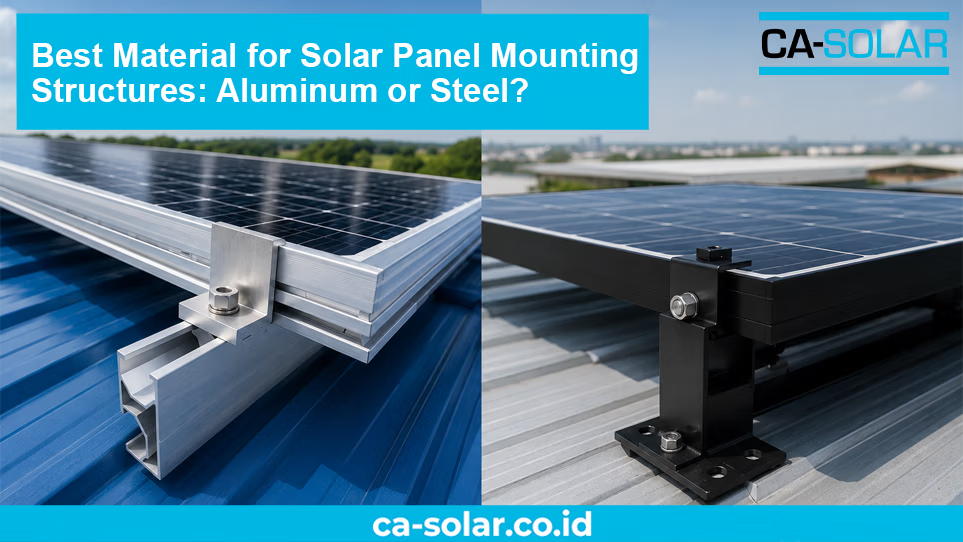
Choosing high-quality solar panels is important, but selecting the right material for the solar panel mounting structure is just as essential. A solar mounting system supports the entire solar installation for decades, meaning it must withstand sunlight, rain, wind, and changing weather conditions every day.
Today, the two most commonly used materials for solar panel mounting structures are aluminum and steel. Each material has its own characteristics, advantages, and ideal applications.
So, which material is the better choice? Let's explore the differences.
Why Is the Material of a Solar Panel Mounting Structure So Important?
A solar panel mounting structure does more than simply support the solar panels. It also keeps the panels securely positioned, allowing the system to operate efficiently and safely.
The material used affects several important aspects, including:
- Corrosion resistance.
- Overall structural weight.
- Ease of installation.
- System lifespan.
- Long-term maintenance costs.
For this reason, understanding the important components of a modern solar panel system will help you see why selecting the right material is one of the most important decisions in any solar installation.
Aluminum for Solar Panel Mounting Structures
Aluminum is the most widely used material in modern solar mounting systems, particularly for rooftop and commercial applications. One of the main reasons is that aluminum offers an excellent combination of lightweight construction, structural strength, and corrosion resistance.
Advantages of Aluminum :
- Lightweight, making installation easier.
- Naturally resistant to corrosion without requiring additional coatings.
- Easy to manufacture with high precision.
- Requires relatively little maintenance.
- Ideal for modular mounting systems.
Because of its lightweight properties, aluminum also reduces the load placed on building structures, making it a popular choice for rooftop installations.
Steel for Solar Panel Mounting Structures
Besides aluminum, steel is also used as a material for solar panel mounting structures, especially in projects requiring higher structural strength. Steel has excellent load-bearing capacity, making it suitable for support structures with larger spans and heavier loads.
Advantages of Steel :
- High mechanical strength.
- Suitable for heavy-duty structural applications.
- Excellent structural rigidity.
- Commonly used in large-scale construction projects.
However, steel requires corrosion protection, such as galvanization or specialized coatings, particularly when installed in humid environments or coastal areas.
Aluminum vs. Steel Comparison
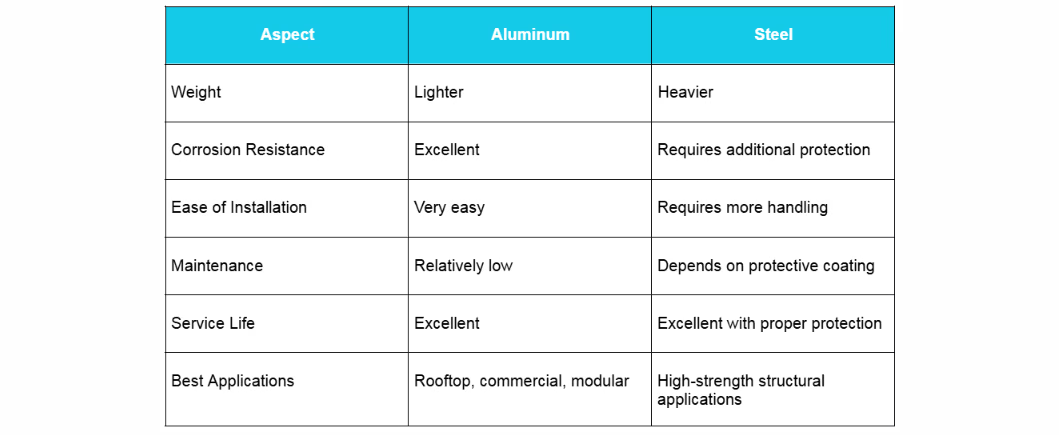
Each material offers advantages depending on the project's requirements. Therefore, material selection should consider the installation location, environmental conditions, and the overall structural design.
Why Is Aluminum Widely Used in Solar Mounting Systems?
In recent years, aluminum has become the preferred material for many solar mounting systems.
Besides its corrosion resistance, aluminum supports modular system designs that make installation faster and more efficient.
Components such as Solar Profiles, Mid Clamps, End Clamps, Foot Brackets, and Join Bars are commonly designed to work with aluminum structures, simplifying assembly in the field. You can learn more about the function of each component in the article important components of a modern solar panel system.
Maintaining Solar Panel Mounting Structure Materials
Both aluminum and steel require periodic inspections to ensure the system continues operating at its best.
Routine inspections help verify that all connections remain secure, components are free from damage, and no signs of corrosion are present. Routine inspections help verify that all connections remain secure, components are free from damage, and no signs of corrosion are present.
By performing solar panel mounting structure maintenance regularly, the system's service life can be extended while reducing the risk of costly repairs in the future.
Choose the Right Material for Your Project
There is no single material that is the best choice for every situation.
Aluminum excels in terms of lightweight construction, corrosion resistance, and ease of installation, while steel offers exceptional structural strength for specific applications.
Therefore, material selection should be based on the project location, environmental conditions, system capacity, and installation method. If you are still planning your project, understanding a solar panel installation guide will help you choose the most suitable mounting system for your installation.
CA-Solar Uses Aluminum-Based Mounting Systems
CA-Solar provides a wide range of aluminum solar mounting system components, including Solar Profiles, Mid Clamps, End Clamps, Foot Brackets, and Join Bars, designed to create installations that are strong, lightweight, and corrosion-resistant.
With a modular concept, every component integrates seamlessly with one another, allowing installations to be completed faster, more accurately, and with greater flexibility when future system expansion is required. These advantages are also among the key benefits of modular solar mounting systems, making them an ideal solution for commercial and industrial projects.
Conclusion
Both aluminum and steel offer their own advantages as materials for solar panel mounting structures. Aluminum provides lightweight construction, outstanding corrosion resistance, and easier installation, while steel delivers exceptional structural strength for specialized applications.
In many modern installations, particularly rooftop and modular systems, aluminum has become the preferred choice because it offers an excellent balance of strength, efficiency, and ease of maintenance. Regardless of the material selected, component quality, structural design, and proper installation remain the key factors that determine the long-term reliability of a solar panel system.