What is a Solar Carport Functions Advantages and Main Component System
What Is a Solar Carport?
The use of solar energy does not always require solar panels to be installed on a building's rooftop. Open areas such as parking lots can also be utilized as locations for solar panel installation through a system known as a solar carport.
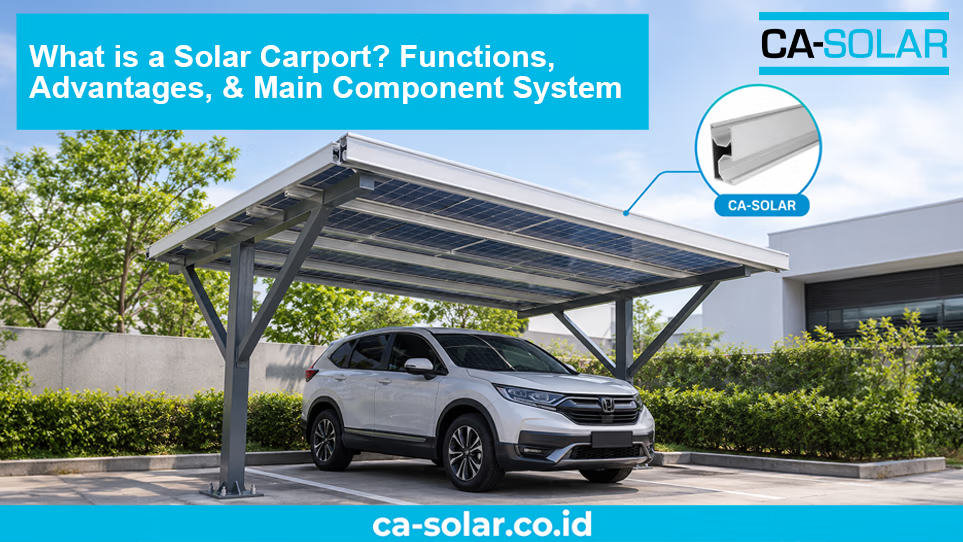
A solar carport is a structure similar to a carport or canopy, with solar panels installed on its upper section. The structure serves two functions: providing protection for vehicles while also creating a space for utilizing solar energy.
This concept can be particularly useful for buildings with sufficient parking space but limited rooftop areas. By utilizing an area that was previously used only for parking, the space can serve an additional purpose as part of a solar energy system.
In its application, a solar carport requires a supporting structure designed to hold the solar panels in an appropriate position and configuration. Therefore, a solar mounting system is an important part of solar carport planning.
How Does a Solar Carport Work?
In principle, a solar carport works similarly to a conventional solar panel system. Solar panels installed on the upper structure receive sunlight and convert solar energy into electricity.
The electricity generated can then be used according to the configuration of the system. In commercial buildings and industrial facilities, the generated energy can become part of the facility's operational electricity supply.
Meanwhile, the carport structure continues to serve its primary function as a shelter for vehicles. This allows a single area to serve two purposes: providing parking space and supporting solar energy generation.
The design and configuration of a solar carport may vary depending on the site conditions. Several factors need to be considered, including the available area, parking layout, structural positioning, energy requirements, and surrounding environmental conditions.
What Are the Components of a Solar Carport?
A solar carport consists of more than just solar panels. Several components work together to ensure that the system can be properly installed and used. In general, components associated with a solar carport may include:
1. Solar Panels
Solar panels are the components that capture energy from sunlight and convert it into electricity. The number of panels used can be adjusted according to the system design and the energy requirements to be achieved.
2. Solar Mounting System
A solar mounting system is the structure used to support and maintain the position of solar panels. In a solar carport, the mounting structure also needs to be integrated with the carport construction so that it can support the panels while maintaining the functionality of the parking area below.
The selection of materials and the design of the solar panel frame are important because the structure will be installed outdoors and directly exposed to environmental conditions.
3. Mounting Components
The mounting structure may use various components such as solar profiles, mid clamps, end clamps, foot brackets, and join bars. Each component has its own function in forming the solar panel mounting structure.
A modular system allows these components to be arranged according to specific design requirements and installation conditions.
4. Carport Structure
The main structure supports the overall construction and the solar panels installed above it. Its design needs to consider the parking layout as well as vehicle and pedestrian access.
5. Electrical System
In addition to the mechanical structure, a solar carport also requires electrical components so that the electricity generated by the solar panels can be used according to the system design.
The electrical configuration may vary depending on the requirements and type of installation.
What Are the Advantages of a Solar Carport?
Solar carports offer several advantages that make them an interesting option for various types of buildings, particularly locations with relatively large parking areas.
1. Make Parking Areas More Productive
One of the main advantages of a solar carport is its ability to provide an additional function to an existing parking area.
Parking areas require open space to allow vehicles to enter, exit, and move easily. By using the carport structure as a location for solar panel installation, the area can serve not only as a parking facility but also as part of a solar energy system.
This approach can be particularly relevant when a building has limited rooftop space for solar panel installation.
2. Provide Protection for Vehicles
A solar carport can also function as a shelter that protects vehicles from direct sunlight and weather conditions.
Solar panels are installed on the upper section of the structure, creating a shaded area underneath. For parking users, the structure can help reduce direct exposure of vehicles to outdoor conditions.
As a result, energy generation and vehicle protection can be combined within a single structure.
3. Provide an Alternative Location for Solar Panel Installation
Not every building has a rooftop that is suitable for solar panel installation. Some buildings may have limited roof space, roof configurations that are less suitable, or other requirements that make the rooftop less practical as the primary installation location.
In such situations, a solar carport can provide an alternative because it utilizes an existing open area.
Parking areas at office buildings, commercial facilities, industrial facilities, and other buildings can be considered for solar carport installations when site conditions and structural requirements allow.
4. Utilize Existing Open Areas Without Requiring Additional Land
A solar carport can be an interesting solution when an existing parking area is available but has not yet been utilized for energy generation.
Rather than requiring additional land specifically for solar panel installation, the structure can be positioned above an area that is already being used for parking.
This makes the solar carport concept different from a ground-mounted solar system, which uses land as the primary installation area.
5. Support Solar Energy Utilization in Commercial and Industrial Areas
Commercial and industrial facilities generally have significant electricity requirements and may also have relatively large parking areas. These conditions make solar carports a potential option when planning solar energy utilization.
For example, employee parking areas, customer parking lots, or operational vehicle areas can be considered as potential locations for solar carports.
However, their application should still be adjusted according to energy requirements, site conditions, and the overall system design.
6. Can Be Developed Using a Modular System
A modular solar mounting system allows the structure to be developed according to specific design requirements.
A modular approach can help adapt the mounting configuration to the size of the parking area, the number of solar panels, and the required structural arrangement. This flexibility can be useful when designing systems for areas with different shapes or parking configurations.
However, the design still needs to consider structural conditions, loads, environmental factors, and installation requirements.
Solar Carports for Industrial Areas
At industrial facilities, utilizing parking areas for solar carports can be one approach to optimizing existing space.
Factories and production facilities generally require electricity to support various operational activities. At the same time, these facilities may have relatively large parking areas for employees and operational vehicles.
With a solar carport concept, parking areas can provide an additional function as part of a solar energy system.
However, the application should begin with an evaluation of the site conditions. The available area, structural orientation, vehicle access, panel positioning, environmental conditions, and electricity requirements all need to be considered when developing the design.
In addition, solar panel capacity should be determined based on energy requirements and system conditions, rather than simply the size of the available parking area.
What Should Be Considered Before Building a Solar Carport?
Building a solar carport is not simply about placing solar panels above a parking area. The structure and solar energy system need to be designed as an integrated solution so that both parking and energy-generation functions can operate properly. Several factors should be considered, including:
- Site Conditions and Available Area : The size and layout of the parking area will influence the structural configuration. The position of structural columns and the span of the structure should also be planned so they do not interfere with vehicle movement.
- Structural Design and Materials : The materials used should be selected according to structural requirements and environmental conditions. For the solar mounting system, material selection is one of the factors related to the durability of the solar panel frame, particularly because the structure is installed outdoors.
- Environmental Conditions : Exposure to sunlight, rain, humidity, wind, and other environmental conditions should be considered as part of the design process. Site characteristics can vary from one location to another, so the design should not simply rely on a single standard configuration.
- Access and Safety : The structure should allow vehicles and users to move safely throughout the parking area. The position of structural columns, structure height, vehicle lanes, and entry and exit points should all be considered during the planning stage.
- Maintenance : Solar panels and mounting structures require attention after installation. Dust, dirt, environmental conditions, and structural components should be inspected periodically so that the system can be properly maintained.
Solar Carport vs. Rooftop Solar Panels
Solar carports and rooftop solar systems can both be used to utilize solar energy, but they use different installation locations.
In a rooftop solar system, solar panels are installed on top of a building. This approach can be suitable when the condition and structure of the roof support solar installation.
Meanwhile, a solar carport uses a parking area as the installation location. A carport structure is built or prepared to support the solar panels while providing parking space underneath.
This difference means that the choice of system should be based on the characteristics of each site. A building with limited rooftop space but a large parking area may consider a solar carport as an alternative.
Therefore, there is no single installation method that is always the most suitable for every location. Solar panel installation design should consider the characteristics of the building, available space, energy requirements, and environmental conditions.
Is a Solar Carport Suitable for Every Parking Area?
Solar carports can be used in various types of parking areas, but this does not mean that every parking area is automatically suitable for such a system.
Available space, ground or supporting structural conditions, vehicle movement patterns, installation orientation, environmental conditions, and energy requirements are among the factors that need to be assessed.
A parking area that is too narrow or has a complex vehicle circulation pattern may require a more specialized structural design. Similarly, locations with specific environmental conditions may require suitable materials and construction methods.
For this reason, planning is an important stage before determining the shape and configuration of a solar carport.
Solar Carports as Part of Solar Energy Utilization
The development of solar energy utilization means that solar panel installation is no longer limited to rooftops. Parking areas, open spaces, and other available areas can also be considered according to the characteristics of each site.
A solar carport offers an interesting approach because it combines two functions within a single structure. The parking area can continue to be used for vehicles, while its upper section is utilized for solar panel installation.
For companies and facilities with relatively large parking areas, this concept can be considered as one option when planning a solar energy system.
Ultimately, the successful implementation of a solar carport is not determined by the solar panels alone. The mounting structure, materials, design, area configuration, and installation planning also play important roles in creating a system that meets the site's requirements.
With proper planning, a solar carport can be an effective way to optimize existing space while supporting the utilization of solar energy for buildings and industrial facilities.