Important Components in Modern Solar Panel Mounting Systems
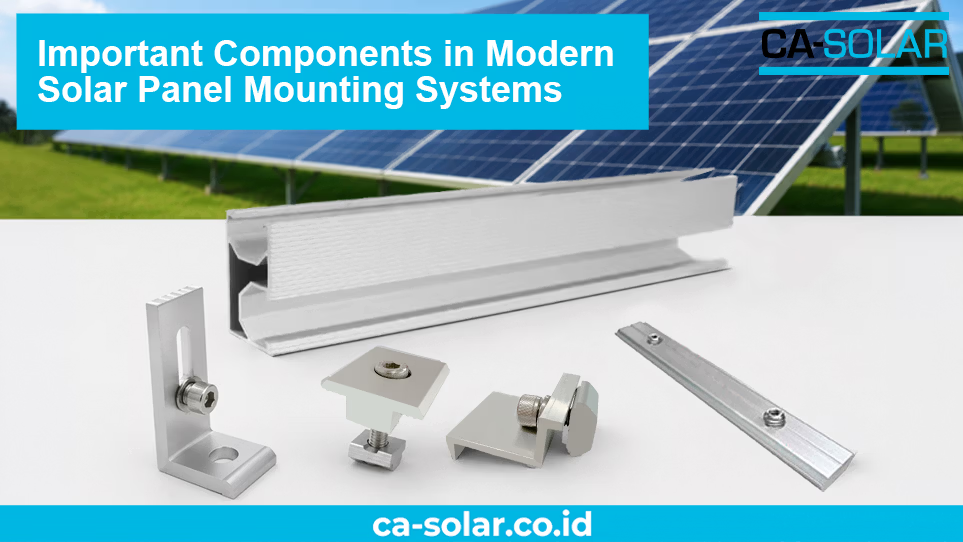
When discussing solar panel systems, most people focus only on the solar panels themselves as the primary electricity-generating component. In reality, there are many other components that are equally important to ensure the system operates safely, remains stable, and delivers long-term performance.
One of the most overlooked parts is the solar mounting system, which serves as the structural support for the entire solar array. Without a properly designed mounting system, solar panels cannot be installed securely, potentially affecting both safety and overall system performance. Furthermore, the materials used for the solar panel mounting structure play a significant role in determining the strength of the system and its resistance to various environmental conditions.
So, what are the essential components of a modern solar panel system?
Solar Mounting System: The Foundation of a Solar Installation
A solar mounting system is the structural framework that positions solar panels securely in place. Besides supporting the weight of the panels, it must also withstand wind loads, rain, temperature fluctuations, and vibrations throughout the system's operational life.
Modern mounting systems are designed with a modular concept, allowing installations to be completed faster, more neatly, and with greater flexibility if additional solar panels need to be installed in the future.
To achieve optimal performance, several key components work together within the system.
1. Solar Profile
The Solar Profile is the primary rail that serves as the foundation of the mounting system. Nearly every mounting component is connected to this rail, making it the backbone of the entire structure.
The main functions of a Solar Profile include:
- Supporting the weight of solar panels.
- Providing the mounting point for Mid Clamps and End Clamps.
- Distributing loads to the building structure.
- Maintaining accurate panel alignment.
Because of its critical role, selecting the right Solar Profile is essential. The quality of the aluminum, profile design, and corrosion resistance all have a significant impact on the lifespan of the system. Therefore, understanding the best materials for solar panel mounting structures is an important step before choosing a mounting system.
2. Mid Clamp
A Mid Clamp is used to secure two adjacent solar panels positioned in the middle of an array. This component applies even pressure to the panel frames, keeping them securely in place without damaging the modules.
The primary functions of a Mid Clamp include:
- Connecting two solar panels.
- Maintaining proper panel alignment.
- Reducing movement caused by wind or vibration.
- Speeding up the installation process.
Although relatively small in size, Mid Clamps must be installed with the correct tightening torque to ensure long-term safety and reliability. For this reason, understanding the solar panel installation guide is just as important as selecting high-quality components.
3. End Clamp
While Mid Clamps are installed between two panels, End Clamps are used on the outermost panels of the array. Their primary function is to secure the last panel, ensuring that the entire panel assembly remains stable and firmly in place.
The advantages of using End Clamps include:
- Securing the outermost panels.
- Improving structural stability.
- Helping the system resist wind loads.
- Maintaining a clean and organized panel layout.
When used together, Mid Clamps and End Clamps create a strong and reliable fastening system while simplifying the installation process, especially in modular mounting systems.
4. Foot Bracket
A Foot Bracket is the component that connects the Solar Profile to the roof or building structure. The entire load of the solar panels is transferred through the Foot Bracket to the building, making it one of the most important components for installation safety.
The functions of a Foot Bracket include:
- Securing the Solar Profile to the roof.
- Transferring panel loads to the building structure.
- Maintaining overall system stability.
- Reducing the risk of structural movement.
Since it continuously supports the system's load, the Foot Bracket should be inspected regularly as part of solar panel system maintenance to ensure the installation continues to perform optimally.
5. Join Bar
In large-scale solar installations, Solar Profiles often need to be extended to accommodate the project's layout. This is where the Join Bar plays an important role.
A Join Bar connects two Solar Profiles together, creating a longer structural rail while maintaining the overall strength of the mounting system. The benefits of a Join Bar include:
- Connecting Solar Profiles.
- Maintaining structural integrity at the joint.
- Maintaining structural integrity at the joint.
- Supporting modular system designs.
This component is widely used in commercial and industrial solar projects because it offers greater flexibility than conventional mounting systems.
Why Are Modular Mounting Systems Becoming More Popular?
As solar technology continues to evolve, mounting systems are increasingly adopting a modular design. Each component is engineered to work seamlessly with the others, making installation faster, more precise, and less prone to errors on site.
In addition to simplifying installation, modular systems make it easier to replace components or expand the solar array when electricity demand increases in the future. This is one of the key benefits of modular solar mounting systems, especially for commercial and industrial projects that require greater flexibility.
Choosing High-Quality Components for Long-Term Investment
Solar Profiles, Mid Clamps, End Clamps, Foot Brackets, and Join Bars are components designed to operate alongside solar panels for decades. Therefore, material quality and manufacturing standards should never be overlooked.
CA-Solar provides a complete range of solar mounting system components, including Solar Profiles, Mid Clamps, End Clamps, Foot Brackets, and Join Bars, designed to support faster, stronger, and more efficient installations. With a modular design, each component integrates seamlessly with the others, simplifying installation while allowing future system expansion with ease.
Conclusion
A modern solar panel system depends not only on the quality of the solar modules but also on the strength and reliability of its supporting structure. Solar Profiles, Mid Clamps, End Clamps, Foot Brackets, and Join Bars all work together to create a safe, durable, and long-lasting installation.
After understanding the role of each component, the next step is choosing the right materials for solar panel mounting structures, following a proper solar panel installation guide, and performing regular solar panel system maintenance to keep the system operating at its best. If you would like to learn why modular systems are becoming the preferred choice for many projects, you can also explore the benefits of modular solar mounting systems.