The Role of Solar Panels in Supporting Corporate ESG Initiatives
1. What Is ESG?
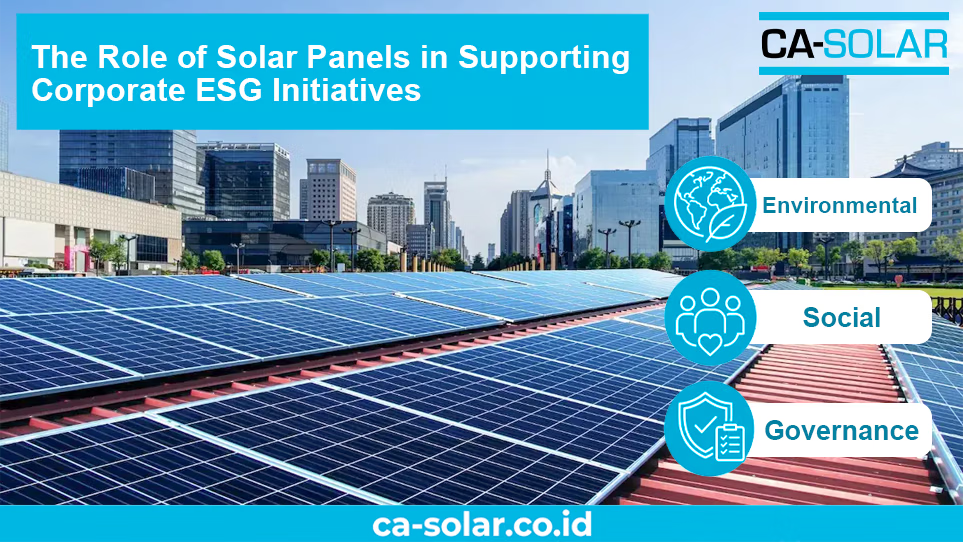
ESG stands for Environmental, Social, and Governance, a framework used to evaluate how a company operates in a sustainable and responsible manner.
Today, ESG has become an important consideration in the business world because companies are no longer assessed solely on financial performance, but also on their impact on the environment, society, and corporate governance practices.
ESG consists of three key pillars:
1.1. Environmental
The Environmental aspect focuses on how a company's activities affect the environment, including:
- Energy consumption
- Carbon emissions
- Waste management
- Natural resource utilization
- Adoption of renewable energy
1.2. Social
The Social aspect focuses on a company's relationship with employees, customers, and the surrounding community. Examples include:
- Occupational health and safety
- Employee welfare
- Corporate social responsibility
- Community engagement
1.3 Governance
Governance refers to how a company is managed in a transparent, ethical, and accountable manner. Key areas include:
- Regulatory compliance
- Transparency and reporting
- Risk management
- Business ethics
2. Why Is ESG Important for Companies?
In recent years, ESG has gained significant attention from investors, customers, governments, and other stakeholders.
Many organizations are now evaluated not only on profitability but also on their commitment to sustainability.
Some of the reasons ESG has become increasingly important include:
- Enhancing corporate reputation
- Meeting customer and global market expectations
- Supporting compliance with evolving regulations
- Reducing long-term business risks
- Attracting sustainability-focused investors
For companies involved in global supply chains, ESG performance can even become a requirement for maintaining business relationships and securing new opportunities.
3. The Connection Between ESG and Energy Consumption
One of the most significant ESG considerations is energy usage. Many industrial facilities consume large amounts of electricity to support daily operations. At the same time, conventional energy sources remain a major contributor to carbon emissions.
As a result, companies are increasingly seeking ways to reduce their environmental impact without compromising productivity. One of the most effective solutions is the adoption of solar energy through solar panel systems.
4. How Solar Panels Support ESG Goals
4.1 Reducing Carbon Emissions
Solar panels generate electricity from sunlight without burning fossil fuels.
By utilizing solar energy, companies can reduce their dependence on conventional power sources and lower their carbon footprint.
The greater the contribution of solar-generated electricity, the greater the potential reduction in greenhouse gas emissions.
4.2 Supporting Renewable Energy Adoption
The use of renewable energy is a key indicator within the Environmental pillar of ESG.
Solar panel systems enable businesses to generate a portion of their electricity from a clean and sustainable energy source.
This demonstrates a company's commitment to environmental responsibility and long-term sustainability.
4.3 Improving Energy Efficiency
In addition to generating clean energy, solar panels can help organizations manage energy consumption more efficiently.
When properly designed and implemented, solar systems can reduce reliance on grid electricity and contribute to long-term operational cost savings.
4.4 Strengthening Corporate Image and Responsibility
Renewable energy initiatives are often part of a company's broader sustainability strategy.
Installing solar panels can demonstrate to customers, business partners, investors, and communities that the organization is actively working toward environmental stewardship.
This commitment can strengthen brand reputation and enhance stakeholder trust.
4.5 Supporting Sustainability Reporting
Many companies publish sustainability reports as part of their ESG initiatives.
Data related to solar energy generation and renewable energy usage can serve as measurable indicators of environmental performance and sustainability progress.
These metrics can help organizations communicate their ESG achievements more effectively.
5. Benefits of Solar Panels for Industrial Companies
For industrial facilities, solar energy offers advantages that extend beyond ESG compliance. Key benefits include:
- Lower electricity costs
- Reduced dependence on conventional energy sources
- Support for carbon reduction targets
- Improved business competitiveness
- Long-term sustainability benefits
As environmental concerns continue to grow, investing in solar energy can become both a strategic and operational advantage.
6. The Role of Solar Infrastructure in ESG Success
The success of a solar energy project depends not only on the solar panels themselves but also on the supporting infrastructure.
One critical component is the solar mounting structure, which provides secure and stable support for the panels.
A well-designed mounting system can help:
- Optimize the use of available installation space
- Improve long-term system reliability
- Simplify installation processes
- Support future system expansion
For commercial and industrial applications, modular aluminium mounting systems can offer additional flexibility while improving installation efficiency.
7. Implementing Solar Panels as Part of an ESG Strategy
Every company has unique energy requirements and sustainability objectives. Therefore, solar panel implementation should be planned based on factors such as:
- Current energy consumption
- Available installation area
- Carbon reduction goals
- Future business expansion plans
With proper planning and execution, solar energy can become an integral part of a company's ESG strategy while delivering both environmental and financial benefits.
8. Conclusion
ESG has become a key consideration for modern businesses. Companies are increasingly expected to operate responsibly while balancing profitability, environmental stewardship, social responsibility, and good governance.
Solar panels provide a practical solution for supporting these objectives. By reducing carbon emissions, increasing renewable energy usage, and improving energy efficiency, solar energy systems can help organizations strengthen their ESG performance.
For commercial and industrial companies, investing in solar power is not only a sustainability initiative but also a strategic step toward long-term operational resilience and business growth.