Challenges of Solar Panel Mounting in Coastal Areas like Surabaya
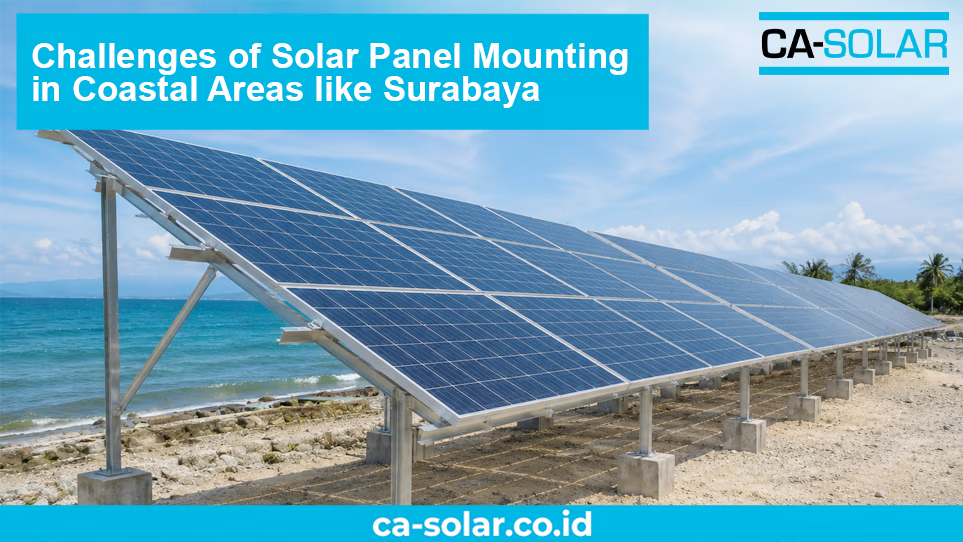
Understanding Solar Mounting Structures in Coastal Areas
Solar panel mounting structures in coastal areas are support systems designed to withstand more extreme environmental conditions, especially in regions near the sea.
Compared to non-coastal areas, these structures must handle high humidity, salt exposure, and stronger wind loads.
The Role of Mounting Structures in Coastal Environments
In coastal environments, mounting structures play a critical role in maintaining system stability and durability, including:
- Securing panels under high wind conditions
- Maintaining optimal positioning over time
- Protecting the system from corrosion
- Ensuring long-term structural reliability
Characteristics of Coastal Environments like Surabaya
- High Humidity : Coastal areas typically have high humidity levels that accelerate corrosion processes.
- Salt Content in the Air : Salt particles carried by the air are a major cause of material degradation.
- Exposure to Sea Winds : Strong coastal winds create additional loads on the structure.
- Temperature and Solar Exposure : High temperatures can affect material expansion and long-term durability.
Key Challenges for Solar Mounting Structures in Coastal Areas
1. Corrosion from Salt and Sea Air
Continuous exposure to salt significantly accelerates corrosion, especially for unprotected materials.
2. Faster Material Degradation
Harsh coastal environments can shorten the lifespan of structural components.
3. Higher Wind Loads
Wind pressure must be carefully considered in structural design.
4. Long-Term Structural Stability
Structures must remain stable under prolonged exposure to extreme conditions.
5. Increased Maintenance Requirements
Systems in coastal areas typically require more frequent maintenance.
Impact of Coastal Conditions on Mounting Materials
- Effects on Steel : Steel is highly vulnerable to corrosion unless protected with coatings such as galvanization.
- Effects on Aluminium : Aluminium offers natural corrosion resistance, making it more suitable for coastal environments.
- Risks in Connection Points : Joints and fasteners are often the weakest points and most prone to damage.
Design Solutions for Coastal Solar Mounting Structures
- Use of Corrosion-Resistant Materials
- Strong Structural Design
- Additional Protective Coatings
- Proper Drainage and Ventilation
- Wind Load Planning
The Role of Aluminium in Coastal Environments
Aluminium is widely used in modern solar mounting systems due to its natural resistance to corrosion. Key advantages:
- Corrosion-resistant
- Lightweight
- Easy to install
- Long service life in harsh conditions
These properties make aluminium a strong solution for coastal areas like Surabaya.
Modular Systems for Coastal Applications
- Easier Installation : Modular systems enable faster and more efficient installation.
- Flexible Maintenance : Components can be replaced without dismantling the entire structure.
- Efficient Component Replacement : Damage to one part does not affect the whole system.
Key Factors in Choosing Solar Mounting Structures in Coastal Areas
- Environmental Conditions
- Material Durability
- Structural Design
- Ease of Maintenance
- System Lifespan
Case Illustration in Surabaya
In several coastal projects like those in Surabaya, aluminium modular mounting systems have proven effective in improving corrosion resistance while speeding up installation.
This approach also simplifies maintenance and allows easier component replacement without disrupting the entire system.
Conclusion
Coastal environments like Surabaya present unique challenges for solar panel mounting structures, particularly in terms of corrosion, wind load, and material durability.
By selecting the right materials, applying robust structural designs, and using modular systems, these challenges can be effectively addressed.
This approach not only enhances system durability but also improves installation efficiency and long-term maintenance.