Temperature Effects on Solar Panels and Mounting Systems
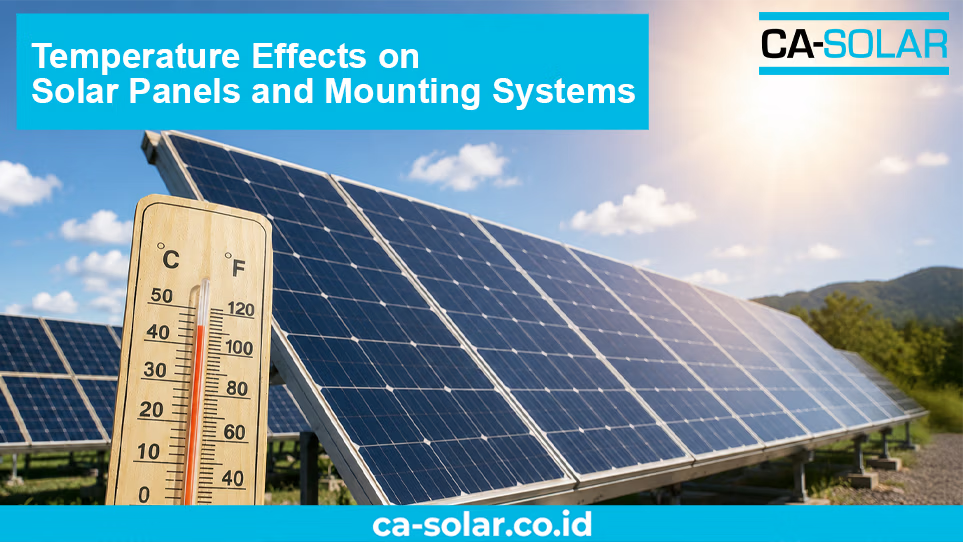
The Impact of Temperature on Solar Panel Performance and the Role of Mounting Structures
1. Why Temperature Affects Solar Panel Performance
Many people assume that hotter weather always means higher energy production from solar panels. However, this is not entirely true.
Solar panels require sunlight to generate electricity, but excessive heat can actually reduce their performance. Solar cells operate most efficiently within a certain temperature range, and their efficiency decreases as temperatures rise beyond that range.
2. The Relationship Between Temperature and Efficiency
Every solar panel has a temperature coefficient, which indicates how much efficiency decreases as temperature increases. In simple terms:
- Higher panel temperature
- Lower energy output
This is especially important in tropical regions like Indonesia, where high temperatures are common throughout the year.
3. What Causes Solar Panels to Heat Up?
Several factors contribute to rising panel temperatures:
- Continuous exposure to sunlight
- Poor airflow beneath the panels
- Insufficient distance between the panel and the surface
- Surrounding materials that absorb and reflect heat
If not properly managed, these factors can cause panels to operate under less-than-ideal conditions.
4. The Impact of High Temperatures on Solar Systems
High temperatures affect not only efficiency but also long-term system performance, including:
- Reduced power output
- Shortened panel lifespan
- Increased risk of overheating
- Unstable system performance
This makes temperature control a critical factor in solar system design.
5. The Role of Mounting Structures in Temperature Control
This is where the solar panel mounting structure becomes very important. It is not just a support system—it also directly influences panel temperature. Key roles of mounting structures include:
- Providing adequate spacing between the panel and the surface
- Allowing proper airflow beneath the panel
- Determining panel positioning and tilt
- Reducing heat buildup
With the right design, heat can be dissipated naturally without the need for additional cooling systems.
6. How Mounting Design Affects Heat Dissipation
A well-designed mounting structure enables passive cooling, where heat is naturally released through airflow. Important design aspects include:
- Open structures that allow better air circulation
- Natural ventilation to reduce panel temperature
- Even heat distribution
In contrast, closed or tightly packed designs can trap heat and reduce efficiency.
7. The Influence of Mounting Material on Temperature
The choice of material also affects how heat is absorbed and released.
- Aluminium: lightweight, does not retain excessive heat, and allows faster heat dissipation
- Steel: stronger, but tends to retain heat longer
Selecting the right material helps maintain a more stable panel temperature.
8. Modular Systems for Temperature Optimization
Modular mounting systems offer greater flexibility in design, allowing better thermal management through:
- Adjustable spacing between panels
- Improved airflow configuration
- Easier structural modifications
This flexibility makes it easier to adapt the system to environmental conditions and optimize performance.
9. How to Reduce the Impact of High Temperatures
Several strategies can help minimize temperature-related issues:
- Use open and well-ventilated mounting designs
- Choose materials that do not retain heat
- Ensure sufficient spacing between panels and surfaces
- Optimize panel placement and layout
- Perform regular maintenance
These approaches help maintain optimal performance over time.
10. Relevance for Industrial and Tropical Environments
In industrial environments and tropical regions like Indonesia, high temperatures are unavoidable. Therefore, mounting system design must consider thermal factors from the beginning. A well-designed structure not only improves efficiency but also extends the lifespan of the system.
11. Conclusion
Temperature has a significant impact on solar panel performance. As temperatures rise, efficiency tends to decrease.
However, with the right mounting design, proper material selection, and the use of modular systems, these effects can be minimized.
A solar panel mounting structure is not just a support system—it plays a key role in maintaining overall system performance.