What Is Battery Energy Storage System BESS and Solar Power Link
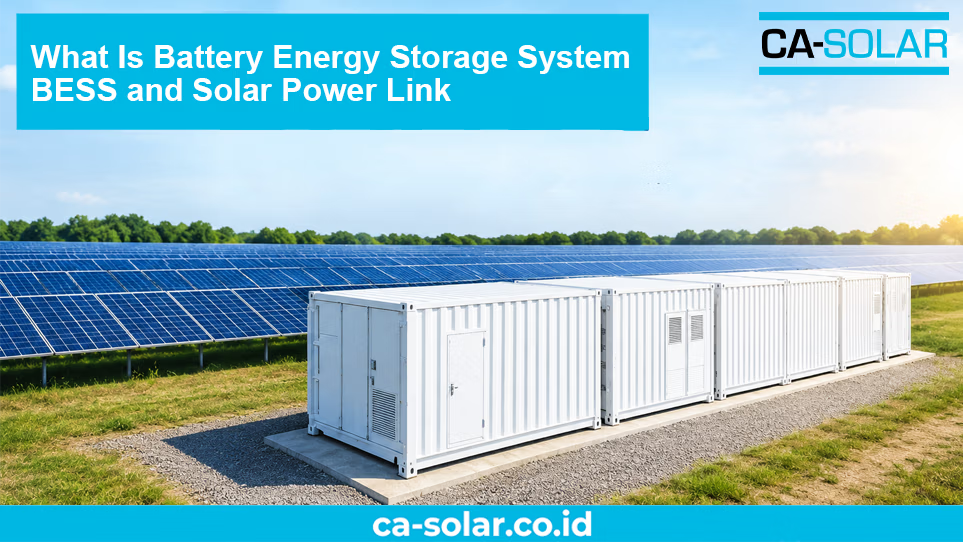
Solar energy is becoming an increasingly important solution for meeting electricity needs more efficiently and sustainably. However, solar power generation depends on the availability of sunlight. Electricity generated during the day does not always coincide with the time when electricity demand is highest.
This is where a Battery Energy Storage System (BESS) comes into play. This technology allows electricity to be stored and used later when needed. As renewable energy adoption continues to develop, BESS Indonesia is becoming a relevant topic in discussions about solar energy utilization and electricity management.
So, what is BESS, how does it work, and how does it relate to solar power systems? Let us explore the answers below.
What Is a Battery Energy Storage System BESS
A Battery Energy Storage System, or BESS, is a system that stores electrical energy using batteries and supporting components that manage the charging, storage, and discharge processes. Unlike a power generation system, BESS does not generate electricity. Instead, it stores electricity from an available source and delivers that energy when required.
A BESS typically consists of several key components:
- Battery: Stores electrical energy in chemical form for later use.
- Battery Management System (BMS): Monitors battery conditions and helps keep the battery operating within safe limits.
- Power Conversion System (PCS): Manages the conversion between direct current (DC) and alternating current (AC), depending on the system requirements.
- Energy Management System (EMS): Controls when the battery charges or discharges based on electricity demand, energy availability, and operating strategies.
These components work together to support more effective electricity management. The configuration of each BESS may vary depending on its capacity, intended application, and connection to the electrical system.
What Are the Functions of a Battery Energy Storage System
The primary function of a battery energy storage system is to store electricity so it can be used at a different time from when it was generated. However, BESS offers more than energy storage alone.
Depending on its design and configuration, BESS can provide several functions.
1. Storing Energy for Later Use
BESS allows electricity available at a particular time to be stored and used when needed. For example, a facility can store some of the electricity generated by solar panels during the day and use that stored energy in the late afternoon or evening, when solar production decreases or stops.
2. Helping Balance Electricity Supply and Demand
Electricity generation and consumption do not always occur at the same time. BESS can help bridge this gap by storing energy when it is available and releasing it when demand increases. This function can help manage changes in electricity supply and demand, depending on battery capacity and the system's operating strategy.
3. Managing Changes in Solar Power Generation
Solar power generation can fluctuate due to weather conditions, cloud cover, and sunlight intensity. BESS can help manage some of these variations by absorbing excess energy at certain times and releasing it when needed. However, its ability to support power stability depends on its power rating, energy capacity, control systems, and operating conditions.
4. Supporting Backup Power Requirements
BESS can also support electricity supply when the primary power source experiences an interruption. However, this capability is not automatically available in every battery system. To provide backup power during a grid outage, the system must be designed with appropriate features, such as islanding capability, a compatible inverter, and suitable electrical protection and control systems.
Therefore, the benefits of BESS should be evaluated based on the intended application and the overall system design.
What Is the Difference Between Power Generation and Energy Storage
Power generation and energy storage serve different purposes, although they can work together within the same electrical system. A power generation system produces electricity from a specific energy source. In a Solar Power Plant, or PLTS, solar panels convert sunlight into electricity through the photovoltaic process.
An energy storage system, on the other hand, does not create new energy. BESS receives electricity from an available source, stores it, and releases it when required. During this process, some energy is lost due to conversion inefficiencies and battery charging and discharging losses.
The key differences are summarized below.
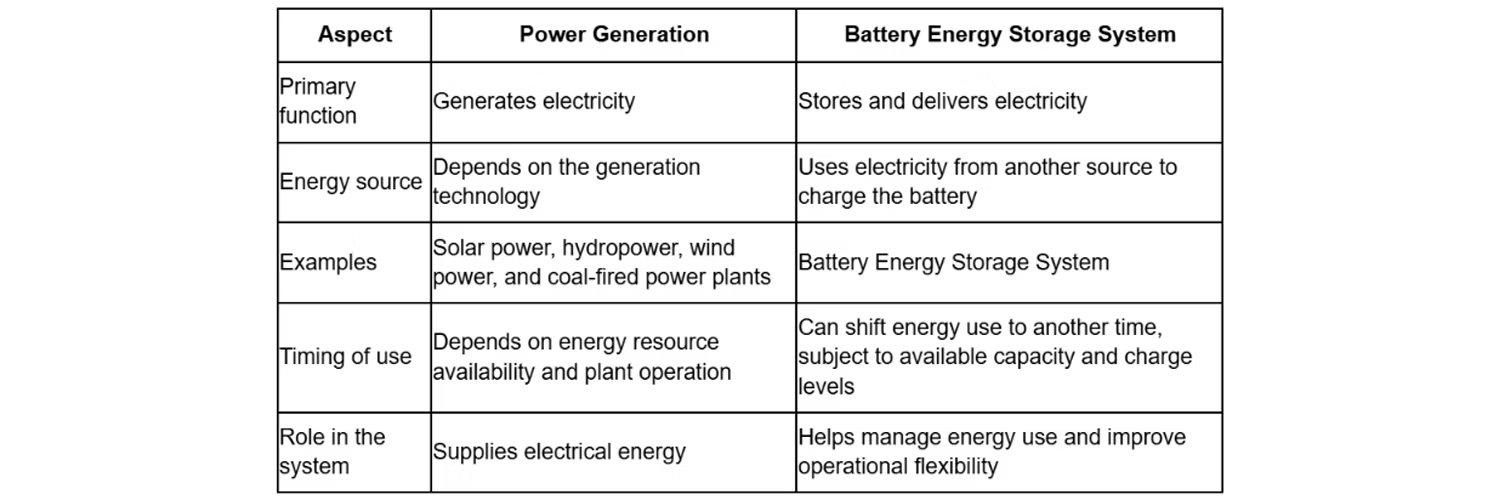
Understanding this distinction is important because BESS is not a replacement for power generation. Instead, it can complement existing generation systems and help make available electricity more flexible to use.
How Does BESS Support Solar Energy Utilization
Solar energy has a generation profile that follows sunlight availability. Solar panels generally produce electricity during the day, with output varying according to environmental conditions and system configuration. BESS can improve the flexibility of solar energy utilization by storing some of the available electricity for use at a different time.
Here is a simplified explanation of how the two systems work together.
1. Solar Panels Generate Electricity
When sunlight reaches solar panels, the panels generate DC electricity. This electricity is then managed by the solar power system and can be converted into AC electricity for electrical equipment, depending on the installation configuration.
2. Solar Energy Is Used or Stored
The generated electricity can be used directly to meet electrical loads. If excess energy is available and the system is designed to charge a battery, some of that electricity can be directed to BESS. The amount of energy stored depends on solar generation, electricity demand at that moment, battery capacity, and the system's charging limits.
3. The Battery Releases Energy When Needed
When solar generation decreases or electricity demand increases, BESS can release stored energy to help meet electricity requirements. For example, an office building can use solar generation to support its electricity consumption during the day and then use stored energy to help meet part of its electricity demand in the late afternoon.
However, a battery can only supply energy within its available stored capacity and power limits. BESS is not an unlimited energy source and may not be able to meet the entire electricity demand of a facility.
Do All Solar Power Systems Need Batteries
No. Not every Solar Power Plant or PLTS requires a battery. The need for BESS depends on the installation's objectives, electricity consumption patterns, grid conditions, and operational requirements. A solar power system without batteries can be a suitable option when the primary objective is to use solar electricity directly while it is being generated.
For example, a commercial facility with high daytime electricity consumption can use solar generation to help meet its operational needs. In a grid-connected system, electricity shortfalls can be supplied by the grid, subject to the installation configuration and applicable requirements. On the other hand, adding a battery may be worth considering when users need greater flexibility in when they consume energy or have specific operational requirements.
Several factors can help determine whether BESS is necessary:
- Electricity consumption patterns: Does the highest electricity demand occur while solar panels are generating power, or after solar production decreases?
- Installation objectives: Is the system intended to reduce electricity purchases from the grid, shift energy use to another time, or support backup power requirements?
- Grid conditions: Is grid electricity available, and what are the characteristics of the power supply at the installation site?
- Capacity and cost: Does the required battery capacity provide sufficient operational benefits to justify the investment?
- Reliability requirements: Does the facility need electricity support during a grid outage, and can the proposed system meet that requirement?
By evaluating these factors, users can determine whether a solar power system alone is sufficient or whether it would benefit from a battery energy storage system.
What Should Be Considered Before Implementing BESS in Indonesia
Implementing BESS Indonesia solutions requires careful consideration of the technical conditions and requirements of each project. Selecting a battery involves more than looking at its storage capacity, as overall performance also depends on power output, efficiency, load characteristics, and integration with the electrical system.
Several important aspects should be considered.
Energy Capacity and Power Rating
Battery energy capacity is typically measured in kilowatt-hours (kWh) or megawatt-hours (MWh), while its power output is measured in kilowatts (kW) or megawatts (MW). Energy capacity indicates how much energy a battery can store, whereas power rating indicates how much power it can deliver at a given time.
Both must be matched to the user's requirements. A battery with a large energy capacity may still be unable to meet peak power demand if its discharge power is limited.
System Efficiency
The energy delivered by a battery is generally lower than the energy used to charge it. This difference results from energy losses during charging, storage, conversion, and discharging.
BESS planning should therefore account for round-trip efficiency, as well as the actual energy requirements of the facility.
Integration with Solar Power and Electrical Systems
BESS must be compatible with the solar power system configuration and the electrical infrastructure at the installation site. This includes selecting suitable inverters or power conversion systems, electrical protection, control systems, and power flow management.
Proper integration helps ensure that the battery performs its intended functions safely and effectively.
Safety and Operational Management
Battery systems require monitoring, temperature management appropriate to the battery technology, electrical protection, and suitable operating and maintenance procedures.
Planning should also consider installation location, ventilation or thermal management, fire protection, and applicable safety standards and manufacturer recommendations.
With proper planning, BESS can become an effective component of an energy management strategy tailored to a facility's requirements.
Conclusion
A Battery Energy Storage System (BESS) is an energy storage technology that allows electricity to be stored and used at a different time. When integrated with solar energy, BESS can help utilize some of the electricity generated during the day to support demand when solar production decreases.
Although power generation and energy storage can complement each other, they serve different functions. Solar power systems generate electricity from sunlight, while BESS stores electricity from another source and releases it when needed.
Most importantly, not every solar power system requires a battery. The need for BESS should be determined by electricity consumption patterns, installation objectives, grid conditions, backup power requirements, and technical and economic considerations.
CA Solar recognizes that every energy requirement is different. By understanding the respective roles of solar power and BESS, users can make more informed decisions about energy solutions that align with their operational needs and solar energy objectives.