How Solar Panels Help Reduce Industrial Operating Costs
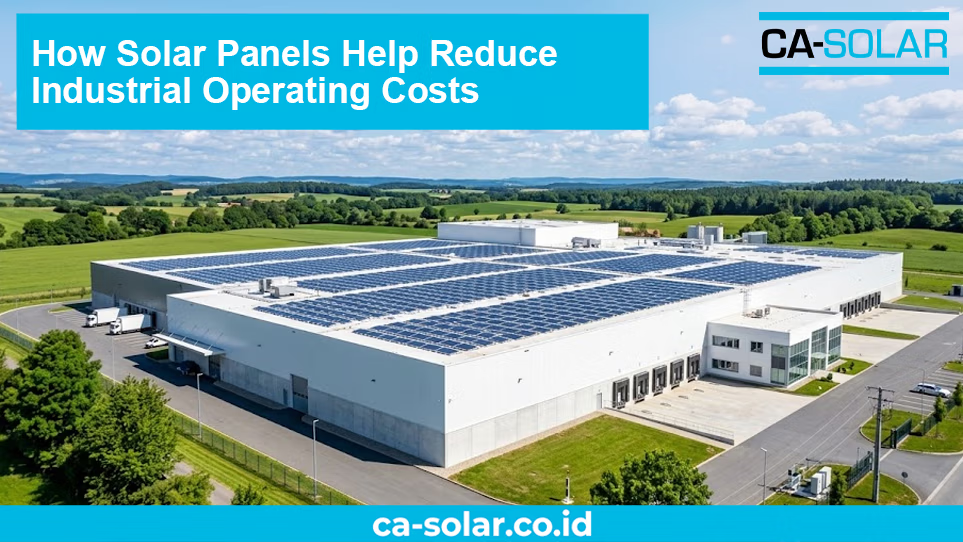
Energy costs are an important part of industrial operations. Factories require electricity to operate production machinery, conveyors, cooling systems, pumps, compressors, lighting, and various supporting facilities.
The larger the production scale, the greater the amount of energy required. This makes electricity costs a significant component of a company's overall operational expenses.
As energy demand and electricity costs continue to change, companies are looking for ways to use energy more efficiently. One option that is increasingly being considered is the use of solar panels for industry.
Solar panels allow companies to utilize sunlight to generate electricity for operational activities. With proper system planning, the electricity generated can help reduce the amount of electricity required from the grid during certain periods.
So, how can solar panels help reduce industrial operating costs?
Why Are Energy Costs Important for Industry?
Why Are Energy Costs Important for Industry?
In some industries, electricity consumption continues throughout long operating hours. Production machinery, conveyors, HVAC systems, lighting, and other equipment may operate simultaneously, resulting in significant energy consumption.
When electricity costs increase, companies do not only face higher electricity bills but may also experience an increase in overall production costs.
Therefore, energy efficiency is not simply about reducing electricity consumption. It can also become part of a company's strategy for controlling operational costs.
How Do Solar Panels Generate Savings?
Solar panels convert sunlight into electricity through photovoltaic or PV technology. In simple terms:
Sunlight → Solar Panel → DC Electricity → Inverter → AC Electricity → Industrial Equipment
The electricity generated can be used to meet part of a facility's energy requirements.
When electricity from solar panels is used by industrial equipment, the amount of electricity that needs to be obtained from the grid can be reduced during certain periods. This is one of the ways solar panels can potentially reduce electricity costs.
The amount of savings varies for each facility because it depends on system capacity, electricity consumption, operating hours, installation conditions, and the amount of energy that can be generated.
Therefore, before installing a solar PV system, companies need to understand how to determine solar panel capacity according to electricity needs so that the system can be designed according to the facility's requirements.
Reducing Dependence on Grid Electricity
One of the main benefits of using solar panels is helping reduce dependence on electricity from the grid. In a grid-connected system, electricity generated by the solar panels can be used to meet the facility's load according to the system configuration.
As a result, part of the facility's electricity requirements can come from solar energy. For industries that operate primarily during daylight hours, this can be an important consideration when designing an energy system.
However, the amount of savings is not determined by panel capacity alone. Electricity consumption patterns also play an important role. When a significant portion of electricity consumption occurs while the solar panels are generating electricity, the potential utilization of solar energy can become more effective.
Solar Panels Help Manage Long-Term Energy Costs
One of the challenges in managing operational costs is changing energy prices. Companies need to consider electricity costs when planning their operations and production. When energy costs change, the company's expenses can also be affected.
Using solar panels can provide companies with an additional energy source generated from sunlight. Sunlight is naturally available and does not require direct fuel purchases for the electricity generation process.
This makes solar PV a potential part of a company's strategy for managing energy costs over the long term. However, the initial investment, installation costs, maintenance, and system characteristics still need to be considered to evaluate the overall economic benefits.
Energy Efficiency Does Not Only Mean Reducing Consumption
Solar panels should not be viewed as the only way to improve energy efficiency. Companies still need to reduce unnecessary energy consumption and ensure that equipment operates efficiently.
For example, using energy-efficient machinery, optimizing HVAC systems, implementing efficient lighting, and managing operating hours can help reduce energy consumption. Solar panels can then become part of this strategy by providing a portion of the electricity required from a renewable energy source.
By combining energy efficiency with on-site energy generation, companies can develop a more comprehensive energy management strategy.
Solar Panels for Various Industrial Facilities
Solar PV systems can be applied to various types of industrial facilities, depending on building conditions and energy requirements. Some examples include:
- Manufacturing plants.
- Warehouses and distribution centers.
- Logistics facilities.
- Office buildings.
- Production areas.
- Commercial buildings.
- Other industrial facilities.
Building rooftops are often considered suitable locations because they can provide space for solar panels without requiring additional land.
However, roof conditions, available area, orientation, structural capacity, and surrounding environment still need to be evaluated before installation.
The Importance of Determining Solar Panel Capacity
Installing a solar panel system with insufficient capacity may result in the generated energy being unable to meet the expected requirements. On the other hand, installing an oversized system without considering electricity demand and consumption characteristics can make the investment less optimal.
Therefore, capacity planning needs to consider several factors, including:
- Facility electricity consumption.
- Industrial operating hours.
- Available installation area.
- Roof condition and characteristics.
- Solar radiation potential.
- Electricity consumption profile.
- Company's energy-saving targets.
With proper planning, the solar PV system can be designed to better match the facility's energy requirements.
The Impact of the Mounting System on Solar Panel Installation
In addition to panels and inverters, the mounting structure is an important part of a solar PV system. Solar panels require a structure that can support them and maintain their position throughout their service life. Therefore, the solar mounting system needs to be selected according to the installation type and environmental conditions.
A well-designed mounting system can help make the installation process more structured while supporting the long-term durability of the solar panels. In a modular system, components such as Solar Profile, Mid Clamp, End Clamp, Foot Bracket, and Join Bar are used to form the panel mounting structure.
Material selection should also be considered because environmental conditions can affect structural durability. This is related to choosing the best material for solar panel mounting structures, which should be based on installation requirements and environmental conditions.
Maintenance to Maintain System Efficiency
Solar panels are designed for long-term use, but their performance still needs to be maintained. Dust, dirt, leaves, moisture, and various environmental conditions can affect the condition of the system if regular inspections are not performed.
Maintenance should not only focus on the solar panels but also on the mounting structure and supporting components. Regular inspections can help identify potential problems at an early stage before they develop into larger issues.
Therefore, companies should understand solar panel mounting structure maintenance guidelines to help keep the mounting structure in good condition throughout its service life.
Solar Panels and Green Manufacturing
Reducing operating costs is not the only reason industries consider using solar energy. The use of renewable energy is also increasingly connected to the concept of green manufacturing. Industries are not only expected to produce efficiently but are also paying greater attention to the environmental impact of their production processes.
Solar panels can help increase the use of renewable energy in industrial operations. This is consistent with the concept of solar energy utilization in green manufacturing, particularly for companies looking to combine operational efficiency with sustainability strategies.
Solar Panels and Corporate ESG Strategies
The use of solar energy can also support a company's sustainability strategy. By increasing the use of renewable energy and reducing dependence on fossil-based energy sources, companies can support environmental targets that form part of their ESG strategies.
However, ESG implementation does not depend solely on solar panel utilization. Companies still need to consider their overall operations, energy efficiency, resource management, and environmental impact. Therefore, solar panels can become one component of a broader sustainability strategy.
Are Solar Panels Always More Cost-Effective?
Solar panels have the potential to reduce electricity costs, but the level of savings is not the same for every industry. Several factors can affect the results, including:
- Solar PV system capacity.
- Electricity consumption.
- Electricity usage patterns.
- Site conditions.
- Solar energy potential.
- Investment and installation costs.
- System maintenance.
Therefore, the decision to install solar panels should be based on an analysis of the facility's requirements and conditions rather than estimated savings alone. Companies should also consider the long-term benefits of the investment.
Conclusion
Energy costs are an important part of industrial operations. Increasing electricity demand and changing energy costs encourage companies to find ways to manage energy use more efficiently.
Solar panels can be one option to help reduce dependence on grid electricity by utilizing sunlight to generate electricity.
The amount of savings can vary for each industry because it depends on system capacity, electricity consumption, operating hours, site conditions, and other factors.
Therefore, solar panel installation should begin with proper planning, including determining system capacity, selecting the installation location, considering component quality, and using an appropriate solar mounting system.
With proper planning and management, solar panels can not only help reduce electricity costs but also become part of a long-term strategy for energy efficiency, green manufacturing, and industrial sustainability.
CA-Solar provides modular solar mounting systems with various components such as Solar Profile, Mid Clamp, End Clamp, Foot Bracket, and Join Bar to support solar panel installation requirements for various applications.